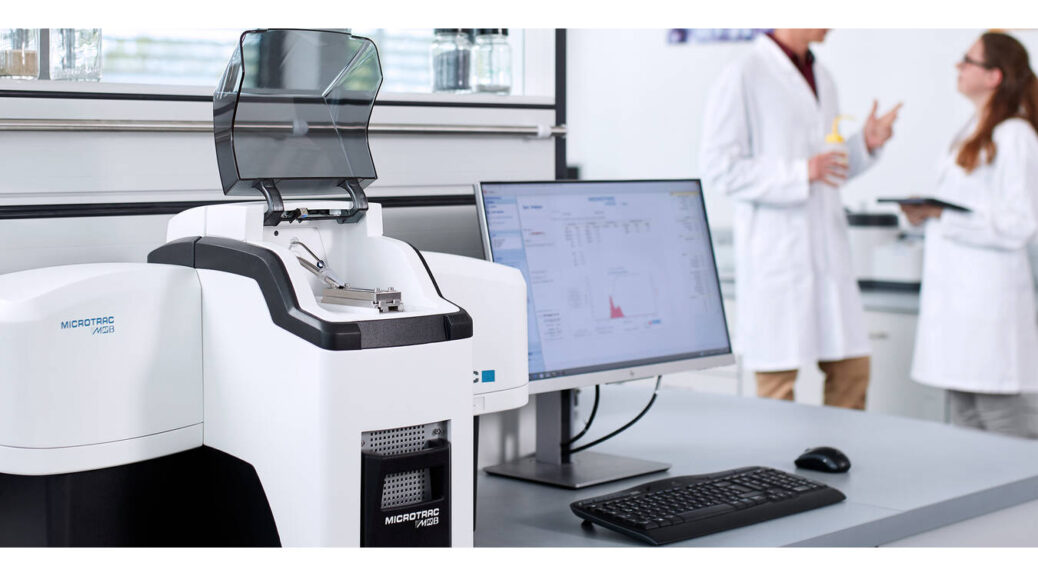
Particle Size Analyzers: Essential Tools for Indonesia’s Pharmaceutical Sector
Particle size matters. In pharmaceuticals, it influences dissolution rate, bioavailability, stability, manufacturability and even patient safety. For Indonesia’s growing pharmaceutical industry — from generic manufacturers to contract development and research organisations — particle size analysers have become indispensable instruments that ensure product quality, regulatory compliance and competitive advantage.
Why particle size is critical in pharmaceuticals
The size and size distribution of particles directly affect how a drug performs. For oral solid dosage forms, smaller particles usually dissolve faster, improving bioavailability for poorly soluble drugs. Conversely, overly fine powders can create problems during formulation, such as poor flow or dust-related handling risks. In inhalation products, particle size determines lung deposition and therapeutic effect; a few micrometres can be the difference between delivery to the deep lung or upper airways. In parenteral suspensions and nanosystems, particle behaviour influences stability, aggregation and immunogenicity. Because of these high-stakes consequences, reliable particle size measurement is central to both development and routine quality control.
Common particle size techniques and when to use them
There is no one-size-fits-all analyser — each technology has strengths and limitations. Key techniques used in pharmaceutical settings include:
- Laser diffraction: Fast, robust and suitable for a wide size range (typically 0.1–3,000 µm). It is excellent for powders, suspensions and emulsions used in everyday QC workflows and scale-up studies.
- Dynamic light scattering (DLS): Ideal for nanoparticles and colloids (typically <1 µm). DLS is widely used in biopharmaceuticals and for monitoring nanosuspension stability.
- Image analysis / microscopy: Provides direct visualisation and shape information in addition to size; useful when particle morphology influences performance (for example, needle-like crystals).
- Coulter principle (electrical sensing zone): Precise for counting and sizing particles in conductive liquids; commonly used for sterility-related particulate analysis in parenterals.
- Sedimentation and sieving methods: Older but still valuable for certain powders and regulatory comparisons.
Choosing the appropriate technique depends on the sample type, size range of interest, required throughput and the information needed (for example, number-based vs volume-based distributions).
Applications across the pharmaceutical lifecycle
Particle size analysers support multiple stages of pharmaceutical production in Indonesia:
- Research and development: During pre-formulation and formulation screening, analysers guide decisions on milling, micronisation and excipient selection. They help optimise dissolution rates and ensure consistent batch-to-batch performance.
- Process development and scale-up: Real-time or at-line particle monitoring enables manufacturers to maintain critical process parameters and avoid costly rework during scale-up from laboratory to production scale.
- Quality control: Routine QC tests verify that incoming raw materials and finished products meet predefined particle specifications, supporting product release and shelf-life claims.
- Regulatory submission and validation: Accurate particle characterisation data strengthens regulatory dossiers and demonstrates process understanding — a valuable asset when interacting with regulators like Indonesia’s BPOM.
Regulatory and validation considerations
Regulators expect objective, validated methods for critical quality attributes. Particle size methods must be validated for accuracy, precision, linearity, range and robustness. For inhalation products and sterile parenterals, there are specific pharmacopoeial references and guidance documents that outline acceptable measurement approaches. Indonesian manufacturers exporting products should ensure methods meet international expectations (for example, ICH and relevant pharmacopeial standards) as well as local requirements.
Practical advice for Indonesian manufacturers
- Match method to purpose: Use laser diffraction for broad QC tasks and DLS for nanoscale formulations. Complementary techniques often give the most complete picture.
- Invest in training: Proper sample preparation and instrument operation are critical. Simple mistakes in dispersion or dilution can distort results.
- Consider automation and at-line options: Modern analysers can integrate with process control systems, allowing tighter control and faster response during production.
- Plan for maintenance and calibration: Regular calibration and preventive maintenance preserve data quality and extend instrument life — essential for laboratories with high throughput.
- Document thoroughly: Maintain SOPs that cover sample handling, instrument settings and data interpretation to support audits and regulatory reviews.
Challenges and the road ahead
Challenges for Indonesian firms include initial capital expenditure, access to skilled analysts and keeping pace with rapidly evolving measurement technologies. However, the benefits — improved product quality, reduced batch failures and stronger regulatory compliance — typically outweigh the costs. Emerging trends such as PAT (Process Analytical Technology), inline particle monitoring and advanced data analytics promise even greater control and insight for manufacturers who invest strategically.
Conclusion
Particle size analysers are more than laboratory gadgets; they are critical tools that underpin product performance, patient safety and regulatory success. For Indonesia’s pharmaceutical sector, embracing robust particle characterisation — combined with validated methods and trained personnel — will support higher-quality medicines, smoother manufacturing and broader market access. In a competitive and highly regulated industry, precise control of particle size is a clear route to stronger products and stronger businesses.